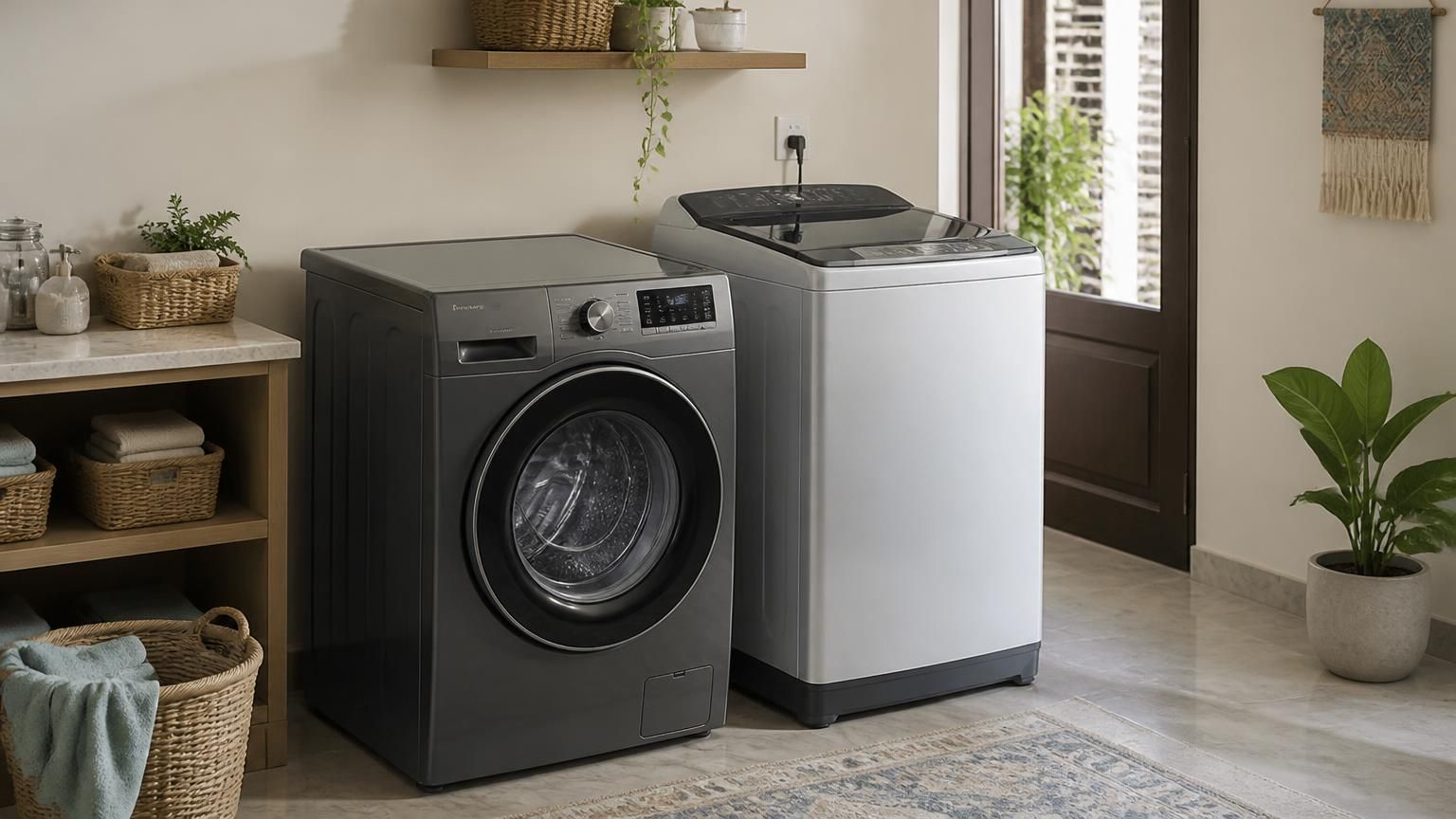
Choosing a washing machine is not just a question of which design looks better. A front-loader and a top-loader can differ in how they wash, how much water they use, how you load laundry, how much space they need and what they cost to own. The right choice depends on your household, laundry habits, available space and budget.
At a glance
- Front-load: Door at the front; clothes tumble in a horizontal drum; often lower water use on comparable models; usually costs more upfront; needs clearance for the door to open.
- Top-load: Lid on top; easier to load while standing; often lower purchase price; needs overhead clearance; wash action may use an impeller or central agitator.
- Neither type is automatically better: model design, programme, load size and maintenance matter.
These are general tendencies, not guarantees. Check the specifications and energy/water label for the exact model.
1. Cleaning performance and fabric care
Front-load machines use a tumbling action: clothes are lifted and dropped through the wash water. Many buyers prefer this for everyday mixed loads, towels and heavier fabrics. Front-load models commonly provide temperature-controlled programmes and more specialised cycles.
Top-load machines may use an impeller (a low-profile plate) or an agitator (a central post). Impeller models generally leave more room in the drum, while agitator models use a more pronounced washing action. Results depend on the machine's design, load size, detergent and programme.
Do not assume that every front-loader cleans better than every top-loader. Look at independent model testing where available, the wash programmes you will actually use and the warranty/service terms.
2. Water and electricity consumption
Front-loaders often use less water because they do not need to fill the entire drum. That can also reduce the energy needed to heat water on models with hot-wash programmes. However, the actual difference depends on the model, load, selected cycle and water level.
Check the BEE label on the exact machine. The Bureau of Energy Efficiency publishes a washing-machine labelling schedule and the Government has notified label requirements. Compare the stated energy consumption per cycle per kilogram and water consumption, not just the star count.
One important detail: the published rating plans distinguish top-load/semi-automatic machines from front-load drum machines and use different test conditions. Do not compare star ratings across different machine types as if they were measured on an identical cycle. Compare models within the same type and inspect the label period and model number.
Official references:
3. Convenience and installation
A top-loader is usually easier if anyone in the household finds bending difficult. You can open the lid from above, and the machine does not need extra clearance in front for a door to swing open. But check the height of overhead shelves or cabinets because the lid needs room to open.
A front-loader needs enough space for the door to open fully. It is often easier to stack a compatible dryer above it, and its top can sometimes be used as a work surface, provided the manufacturer permits it. The door seal should be wiped and left ajar after a wash to help the drum dry.
For either type, measure the installation space, doorways, water inlet, drain point and electrical socket before ordering. Also check whether the retailer includes installation and old-machine removal.
4. Capacity: what size should you buy?
Use household size as a starting point, then account for how often you wash, bedding and bulky items.
- 1–2 people: 6–7 kg can suit regular smaller loads.
- 3–4 people: 7–8 kg is a practical starting range.
- 4–5 people or frequent bedding loads: consider 8–9 kg.
- Larger households or bulky laundry: consider 9 kg and above.
These are planning ranges, not strict rules. A family that washes daily may need less capacity than a smaller household that washes bedding and towels together. Avoid overloading: it can affect cleaning and rinsing.
5. Price, repairs and long-term ownership
Top-load models often have a lower entry price. Front-load machines can cost more initially, and some repairs or replacement parts may also be more expensive. But a model that uses less water and electricity can narrow the ownership-cost gap over time.
Before buying, compare:
- Full product price after bank offers, exchange and delivery charges.
- Warranty on the whole machine and on the motor.
- Availability and cost of service in your PIN code.
- Water-pressure requirements and whether a stabiliser is recommended.
- Cost of compatible detergent, if the manufacturer specifies one.
- Installation, stand and extended-warranty charges.
Do not buy solely on the largest advertised motor warranty. Read what the warranty excludes and whether labour or transport is chargeable.
Which one should you choose?
Choose a front-loader if you prioritise water efficiency, want more temperature/fabric programmes, wash frequently and have enough space and budget. It can be a good long-term choice when the model's label and service support are strong.
Choose a top-loader if you want a lower upfront price, prefer loading from a standing position, need simpler controls or have limited front clearance. A good, correctly sized top-loader can be the more practical choice for many households.
Before you pay: a 7-point checklist
- Compare the exact model numbers, not just brand names.
- Read the BEE label and compare energy and water consumption for the same machine type.
- Check capacity against your largest regular load.
- Measure the installation space and door swing/lid clearance.
- Confirm service availability and warranty conditions.
- Calculate the final checkout price after eligible offers.
- Save the invoice, label details and installation record.
Frequently asked questions
Is a front-load washing machine always more energy-efficient?
No. Front-load models often use less water, but actual energy consumption depends on the model and cycle. Compare the BEE label and programme specifications for the exact machines.
Are top-load washing machines easier to maintain?
They can be easier to access and may have simpler routines, but every washer needs periodic tub, dispenser and filter cleaning. Front-load door seals need particular attention to moisture and residue.
Can I use regular detergent in a front-loader?
Use the detergent type and dose recommended by the manufacturer. Many front-load machines require low-suds/HE detergent. Excess detergent can leave residue and cause problems.
Which machine is better for a small bathroom?
Measure first. A top-loader needs overhead lid clearance; a front-loader needs space in front for the door. Neither is automatically the better fit.
Is an 8 kg machine enough for a family of four?
It is a common starting point, but the answer depends on how often you wash and whether you regularly wash bulky bedding. Check the drum dimensions and load guidance too.
The BP verdict
There is no universal winner. A front-loader is worth considering when lower water use and programme flexibility matter more than the initial price. A top-loader is a sensible buy when convenience, easier loading and upfront affordability lead your priorities. Compare the label, exact model, service network and final price before deciding.
Bargain Pundit is an independent consumer information site. This guide is for general information; specifications and availability vary by model. Always verify the product label, warranty and installation requirements with the manufacturer or retailer before purchase.