3. Measure the plot and access route
Measure the actual area to be cultivated and the narrowest path through which the machine must pass. Include gates, steps, garden paths, turns, storage doors and the distance from the vehicle or shed to the work area.
A machine with a wide tine assembly may cover ground quickly in an open plot but may not fit between established beds. Some tillers have adjustable working widths or removable outer tines; verify whether the adjustment is permitted by the manufacturer and whether the narrower configuration changes the recommended operation.
Check the overall machine width, not only the working width. Handles, wheels and guards can extend beyond the tine assembly. Also consider the space needed to turn around at the end of a row and to lift or move the machine safely when it is not running.
4. Working width and working depth
Working width is the strip of soil disturbed in one pass. A wider machine can reduce the number of passes in an open plot, but it may be difficult to guide in a narrow bed. Working depth describes how deeply the tines are designed to penetrate under specified conditions. Actual depth varies with soil texture, moisture, compaction, tine condition, machine weight and operator technique.
| Specification | Why it matters | What to verify |
|---|
| Working width | Determines coverage per pass | Fixed or adjustable; width with all tines fitted |
| Working depth | Indicates intended cultivation depth | Maximum figure and conditions under which it is measured |
| Tine diameter | Affects how the machine engages soil | Replacement availability and compatibility |
| Number of tines | Affects working pattern and soil movement | Exact configuration and guarding |
| Depth stake or control | Helps manage forward movement and depth | Adjustment range and safe locking |
Do not assume a machine will reach its maximum stated depth in hard, dry or stony soil. Repeated shallow passes may be more appropriate than forcing the tiller deep in one pass. Follow the manual and stop if the machine repeatedly strikes stones, roots or buried objects.
5. Understand soil type before choosing power
Soil varies across Indian regions and even within a single property. Sandy soil is generally easier to loosen but may not hold moisture well. Clay-rich soil can become sticky when wet and hard when dry. Loam may be easier to cultivate when it has suitable moisture. Rocky or root-filled ground can damage tines and create sudden machine movement.
Avoid tilling soil when it is saturated. Wet clay can smear and compact rather than break into a workable structure. Very dry hard ground may cause excessive bouncing and place extra load on the machine. A practical test is to take a small amount of soil and check whether it crumbles rather than sticking together in a wet mass or forming a hard clod. This is a simple field observation, not a substitute for soil testing where crop or landscaping decisions depend on soil condition.
If the plot has many stones, thick roots or construction debris, clear the area and assess whether a tiller is appropriate. Do not use a consumer garden tiller to grind through large roots or buried rubble.
6. Engine or motor type
Garden tillers may use petrol engines, electric motors or battery power, depending on the product category and working capacity.
| Power source | Advantages | Limitations |
|---|
| Petrol engine | Can work away from electrical outlets and may suit larger machines | Fuel, exhaust, noise, servicing and storage |
| Corded electric | No petrol engine servicing and can be relatively simple | Cable reach and electrical safety |
| Battery electric | Cordless operation and simpler starting | Runtime, battery cost and charging |
| Engine-driven attachment | Can share a power unit with other compatible tools | Compatibility and attachment-specific limits |
Petrol models are common in heavier tiller classes. Check engine displacement, rated output, fuel type, starting method, oil requirements and service intervals. Do not compare engine displacement alone as if it directly measured soil-working performance. Gear ratios, tine geometry, machine weight and drive system also matter.
For electric and battery machines, confirm whether the manufacturer actually rates the model for the soil and depth you intend to work. Small cordless cultivators are not automatically equivalent to full-size petrol tillers. Check battery voltage, amp-hour rating, included battery count, charger and replacement cost.
7. Tine design, rotation and replaceability
Tines are the working components that cut and turn soil. Their shape, spacing, rotation direction and material affect how the machine enters the ground and handles plant residue. A counter-rotating design can be useful in some dense-soil applications, but no single tine arrangement is best for every soil or operator.
Inspect the tine assembly in the product manual. Check whether outer tines can be removed for narrower work, whether the guard remains correctly fitted in that configuration and whether the machine requires a specific sequence for assembly. Do not operate with missing guards or improvised tine combinations.
Tines are wear parts. Ask whether individual tines can be replaced and whether the manufacturer or dealer stocks the exact part. Check the shaft, retaining pins, fasteners and protective covers. If a tine is bent, cracked or missing, stop and repair the machine before further use.
8. Transmission, gears and wheel drive
A tiller may use a belt, chain or gear transmission. The design affects power delivery, maintenance and repair access. Check the operator manual for lubrication points, belt tension checks, gearbox oil requirements and service intervals.
Some rear-tine machines have powered wheels and separate tine controls. Others use different arrangements. Forward and reverse gears can improve manoeuvrability, but the controls must be clearly labelled and easy to reach without placing hands near moving parts.
Ask the dealer to demonstrate how the tiller moves, how the tines are engaged and how the machine is stopped. Do not buy a machine if you cannot understand the controls or if the seller cannot explain the correct starting and stopping sequence.
9. Weight, balance and manoeuvrability
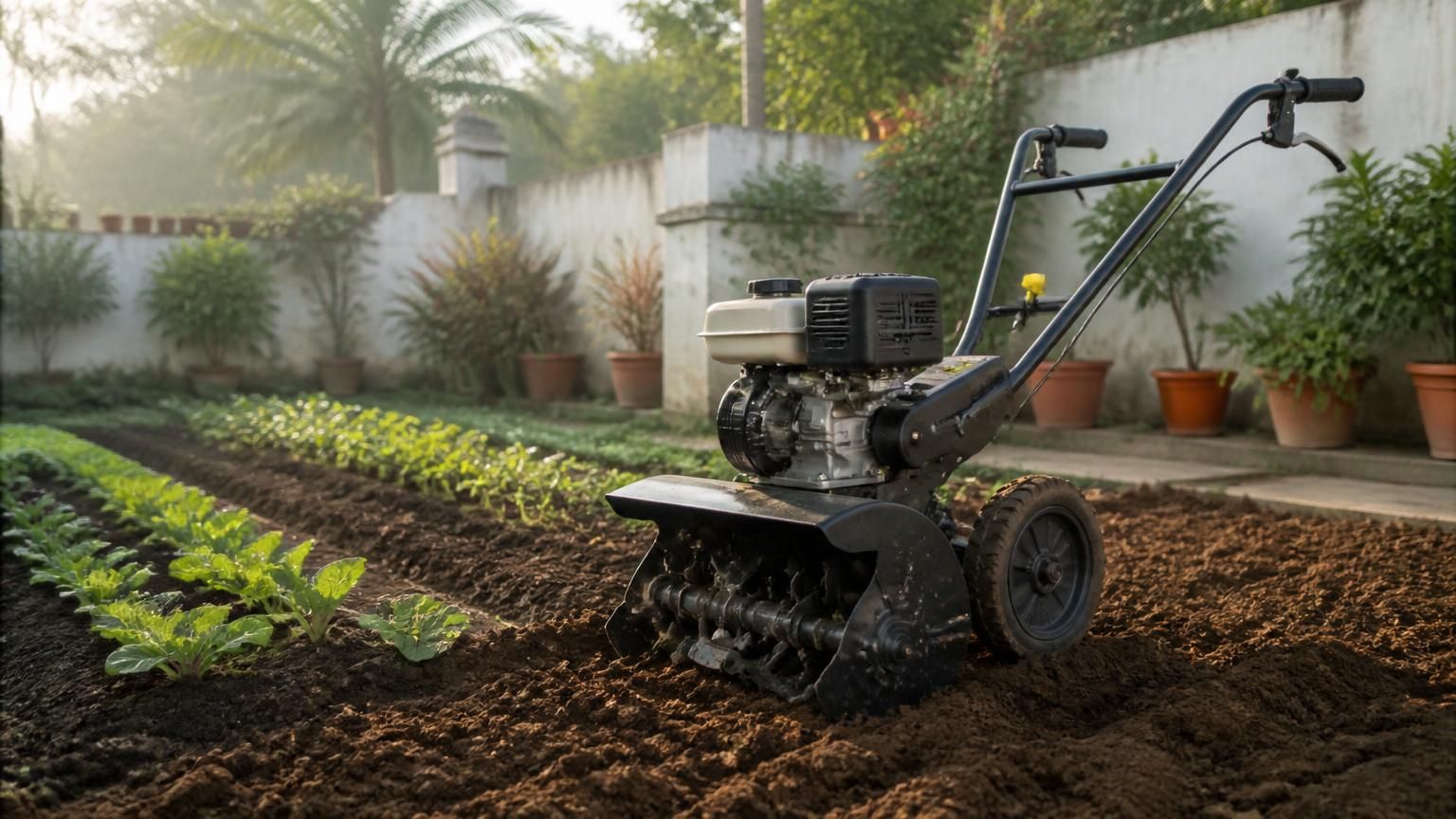
A heavier tiller can help the tines engage the ground, but it can also be difficult to transport, turn and control. Weight should be considered alongside wheel size, handle height, centre of gravity, drive system and the operator's physical capability.
Check whether the machine has transport wheels or a carrying handle. Some wheels are intended only for moving the tiller between work areas and must be placed in a different position for cultivation. Follow the manual rather than assuming the transport position is also the operating position.
Adjustable handles can help users maintain a comfortable posture and keep control while turning. Check whether the handle locks securely and whether the controls remain accessible in each position. If more than one person will operate the machine, confirm that the adjustments suit each operator.
10. Safety systems and protective equipment
Rotating tines can throw stones, cut roots and pull the machine forward unexpectedly. Look for tine guards, a clear engine stop control, secure handle grips and controls that return to a safe state as specified by the manufacturer. Confirm that the operator manual describes the hazards and required protective equipment.
Before starting:
- Clear stones, wire, plastic, branches and other debris from the plot.
- Identify buried irrigation pipes, electrical cables and water lines.
- Keep children, pets and bystanders away from the working area.
- Wear sturdy footwear, eye protection, hearing protection and suitable clothing.
- Tie back long hair and avoid loose garments that can catch.
- Check that all guards, fasteners and controls are in place.
- Start the machine outdoors in a well-ventilated area.
During use, keep both hands on the designated controls and maintain a stable stance. Do not place hands or feet near the tines while the engine is running. Stop the machine, isolate the power source and wait for all moving parts to stop before clearing wrapped roots or debris.
Never operate a petrol tiller in a shed, garage or other enclosed area because engine exhaust contains carbon monoxide. Refuel only when the engine is stopped and cool, away from ignition sources, and follow the manual's fuel-handling instructions.
11. Working near plants, trees and irrigation systems
A tiller can damage shallow roots, drip lines, sprinkler pipes and buried cables. Map the irrigation layout before working. If the garden has a drip system, mark the pipe route and remove or protect components according to the installer’s instructions. Do not assume a buried line is deep enough to avoid the tines.
Keep an appropriate buffer around tree trunks and established shrubs. The machine can cut feeder roots near the surface and destabilise plants. Use hand tools in narrow beds and around delicate plantings where mechanical tilling is not appropriate.
Do not till close to retaining walls, foundations, drains or utility covers unless the site has been checked and the manufacturer permits the operation. A tine striking a hard obstruction can cause sudden movement or damage.
12. Soil amendments and responsible cultivation
A tiller can mix suitable organic matter into the upper soil layer, but it does not make poor-quality or contaminated material safe. Use compost or soil amendments appropriate for the intended plants and follow local horticultural advice. Avoid mixing fresh manure or unsuitable waste into a bed immediately before planting edible crops.
Repeated deep tilling can disturb soil structure and beneficial organisms. It may also bring buried weed seeds to the surface. Use only the depth and frequency needed for the job. For established beds, shallow cultivation or no-dig methods may be preferable depending on the crop and soil.
If the site has suspected chemical contamination, construction waste or unknown fill, do not mechanically mix it through the garden. Obtain appropriate assessment before growing food in that soil.
13. Noise, emissions and storage
Petrol tillers create engine noise and exhaust. Check local residential restrictions, housing-society rules and the machine's declared noise information before use. Avoid operating at inappropriate hours and keep neighbours in mind.
Store the machine in a dry, secure and ventilated location. Follow the manual for fuel storage, battery removal, oil checks and seasonal preparation. Keep fuel in an approved container and away from living areas or ignition sources. Do not leave a hot engine near dry leaves, fabric or combustible materials.
Clean soil from the tine assembly and guards after use, using the method specified by the manufacturer. Do not direct water into engine, bearing or electrical components unless the manual permits it. Inspect fasteners, wheels and cables before the next operation.
14. Maintenance and ownership costs
The purchase price does not include fuel, engine oil, air filters, spark plugs, belts, gearbox lubricant, tine replacement, battery replacement or service labour. Ask for the maintenance schedule before purchase and estimate recurring costs for the hours you expect to use the machine.
| Component | Routine check | Why it matters |
|---|
| Tines | Wear, cracks, bending and retaining pins | Soil engagement and safe operation |
| Guards | Damage and secure mounting | Protection from thrown debris |
| Engine or motor | Starting, noise, leaks and service items | Reliable power delivery |
| Transmission | Belts, chain, gears and lubrication | Drive reliability |
| Wheels | Tyre condition, axle and locking | Control and transport |
| Handles and controls | Secure adjustment and return action | Operator control |
| Battery and charger | Condition, charge and storage | Runtime and replacement cost |
Ask whether service is available locally and whether parts are stocked in India. A machine that is easy to buy but difficult to repair may not be economical over several seasons.
15. Common buying mistakes
Buying the widest machine: A wide tiller may not fit through gates or between established beds.
Choosing by engine size alone: Working width, tine arrangement, transmission and soil conditions also determine performance.
Using a tiller on wet clay: It can smear and compact the soil rather than create a workable tilth.
Ignoring buried services: Tines can damage irrigation pipes, cables and water lines.
Assuming all tillers are for heavy soil: Compact cultivators may be designed only for light, shallow work.
Ignoring transport: A heavy machine without suitable wheels or handles can be difficult to move safely.
Forgetting spares: Tines, belts and other wear parts must be available for long-term ownership.
16. How to compare quotations and model specifications
Compare exact model numbers and the full machine configuration. Ask whether the quoted price includes the tine set, transport wheels, depth stake, tool kit, engine oil, battery and charger where applicable. Confirm whether assembly and first-start demonstration are included.
Request a demonstration on soil similar to the intended work if the dealer can do so safely. Observe how the tiller enters the ground, how it reacts when it meets compacted patches and how the operator controls forward movement. A demonstration on loose display soil may not reflect performance in your plot.
Ask for the manual before payment. Verify the working width, stated depth, rotation direction, gear arrangement, engine or motor specifications, noise information, warranty, service schedule and replacement part numbers. Keep the invoice and warranty documentation.
17. Questions to ask before buying
- Is this model designed for small garden beds or larger open plots?
- Is it front-tine or rear-tine, and what is the practical difference?
- What are the working width and stated depth?
- Can the working width be adjusted, and how?
- What soil conditions is the machine designed for?
- What is the tine rotation direction?
- Does it have powered wheels, forward and reverse gears?
- What is the machine's weight and transport arrangement?
- What guards and safety controls are included?
- What routine maintenance is required?
- Are tines, belts and other parts available locally?
- Where is the nearest authorised service centre?
- What is included in the quoted price and warranty?
Purchase checklist
- [ ] Define the cultivation job and plot size.
- [ ] Measure gates, paths and storage access.
- [ ] Choose front-tine or rear-tine based on work intensity and area.
- [ ] Match working width to the layout of beds.
- [ ] Check working depth and tine configuration.
- [ ] Assess soil texture, moisture, stones and roots.
- [ ] Compare power source, transmission and drive controls.
- [ ] Check machine weight, handles and transport wheels.
- [ ] Locate buried irrigation lines and other services.
- [ ] Review guards, operator controls and safety instructions.
- [ ] Confirm spare parts, service and warranty support.
- [ ] Estimate fuel, maintenance and wear-part costs.
Frequently asked questions
What is the difference between a tiller and a cultivator?
The terms are sometimes used loosely by sellers. A tiller is generally intended to break and turn soil more deeply, while a cultivator often performs shallower soil mixing and weed control. Check the actual tine design, working depth and manufacturer-stated use rather than relying on the product name alone.
Is a front-tine or rear-tine tiller better?
Front-tine models are commonly suited to smaller garden patches and flower beds. Rear-tine models are generally designed for larger open areas and denser soil. The exact model's width, depth, drive system and operating instructions matter.
Can a tiller work in clay soil?
It depends on moisture, compaction, machine capacity and tine design. Avoid working saturated clay or very hard, dry ground. Prepare the soil when it crumbles and follow the manufacturer's limits.
Can I use a tiller around existing plants?
Use caution. Tines can damage shallow roots and irrigation lines. Hand tools may be safer near established trees, shrubs and narrow beds.
Does a wider tiller always save time?
Only in a sufficiently open plot. A wide machine can be awkward in narrow beds, tight turns and restricted access. Measure the plot and gates before buying.
How often should tiller tines be replaced?
There is no universal interval. Inspect for wear, cracks and bending according to the manual and actual use. Replace damaged parts with approved components.
Can I use a tiller to remove weeds?
It may loosen some small weeds during bed preparation, but it can also spread or expose weed seeds and damage roots of desired plants. Follow local horticultural guidance and avoid using it among established crops unless the method is suitable.
Final verdict
Choose a garden tiller by matching its tine arrangement, working width, depth, power and manoeuvrability to the actual plot and soil. Front-tine machines can suit smaller garden beds, while rear-tine machines are intended for larger and more demanding cultivation. Measure access routes, locate buried irrigation lines, avoid unsuitable soil moisture and check service support before paying. The best tiller is not the biggest one; it is the machine that performs the required work safely without damaging the garden or becoming difficult to maintain.