Suitcase Buying Guide India: Cabin vs Check-in, Hard Shell vs Soft Shell, Wheels and TSA Locks
A suitcase is a practical travel purchase that may be used for years. The right one should be easy to move, comfortable to handle and suitable for the type of trips you usually take.
A compact cabin bag may be ideal for short journeys, while longer holidays or family travel may require check-in luggage. Material, wheel construction, weight and internal organisation are also worth comparing.
1. Cabin luggage vs check-in luggage
Cabin luggage is designed to be carried into the aircraft cabin, subject to the airline's size and weight limits. It is useful for short trips and for keeping essential belongings close.
Check-in luggage is handed over to the airline before departure and collected at the destination. It is available in larger sizes for longer journeys.
Do not assume that a suitcase advertised as cabin-sized will be accepted by every airline. Airline limits can vary by carrier, route, aircraft and ticket class. Measure the complete bag, including wheels and handles, and check current airline rules before travelling.
2. Hard-shell vs soft-shell suitcases
| Feature | Hard-shell luggage | Soft-shell luggage |
|---|---|---|
| Structure | Rigid outer shell | Flexible fabric exterior |
| Shape | Retains its form | Can offer some flexibility |
| Organisation | Often uses divided compartments | Frequently offers external pockets |
| Weight | Varies by material and construction | Varies by fabric and frame |
| Cleaning | Smooth surfaces can be easier to wipe | Fabric may need more careful cleaning |
Hard-shell cases may be made from polycarbonate, polypropylene or ABS. These materials differ in flexibility, weight and impact behaviour.
Soft-shell cases often use synthetic fabrics such as polyester or nylon. Check fabric quality, stitching, zips and reinforcement at stress points.
3. Two wheels or four spinner wheels?
Two-wheel suitcases are usually pulled behind the traveller. Their recessed wheels may be less exposed to direct impact, depending on construction.
Four-wheel spinner suitcases can be pushed or pulled in multiple directions and are convenient in smooth airport terminals. Their ease of movement depends on wheel quality and the weight of the packed case.
Check that wheels rotate smoothly, do not wobble excessively and are securely attached. Replacement-wheel availability can matter for long-term ownership.
4. Check the handle and trolley system
The telescopic handle should extend and retract smoothly and should not feel excessively loose. Look for a comfortable top handle, a sturdy side handle on larger cases, a trolley handle that locks at usable heights and secure attachment to the suitcase body.
A handle that feels weak when the suitcase is empty may become inconvenient once the bag is packed.
5. What is a TSA-approved lock?
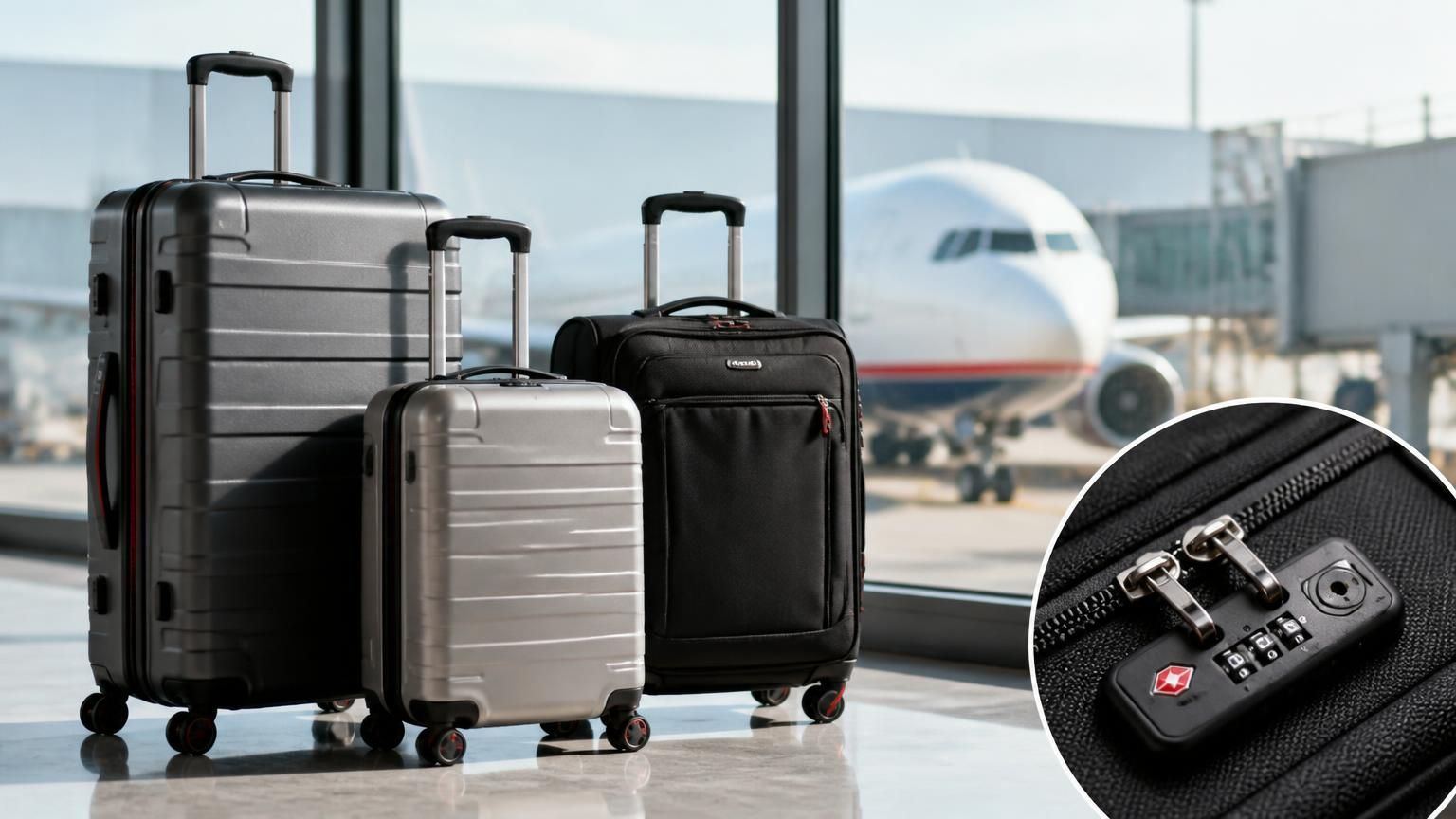
Some suitcases include combination locks described as TSA-approved or TSA-compatible. These are designed to allow authorised security personnel in participating systems to inspect luggage using compatible tools without necessarily damaging the lock. They do not make a suitcase theft-proof.
A lock is only one part of luggage security. Keep valuables and essential documents secure, and follow airline and airport rules for restricted items.
6. Weight and internal organisation
An empty suitcase already uses part of your airline baggage allowance. Compare empty weights of similar-sized models rather than looking only at external dimensions.
Useful interior features may include compression straps, zipped divider panels, separate compartments, laundry sections and small pockets for accessories. Think about how you pack: more compartments can help organisation, while a simpler interior may provide more usable space.
7. Zips, stitching and corner protection
Inspect the parts that experience repeated stress. For hard-shell luggage, check corners, shell joints and the quality of the zip or closure system. For soft-shell luggage, examine stitching, fabric reinforcement and pocket zips.
A suitcase should open and close smoothly without requiring excessive force. If possible, test the main zip and handle before buying.
8. Suitcase size and capacity
Manufacturers may describe suitcases as small, medium or large, but these labels are not fully standardised. Compare actual external dimensions and stated capacity. A taller suitcase is not always more practical if it exceeds airline limits or becomes difficult to lift.