Voltage Stabilizer Buying Guide India 2026: VA vs kVA, Input Range, Relay vs Servo and Appliance Fit
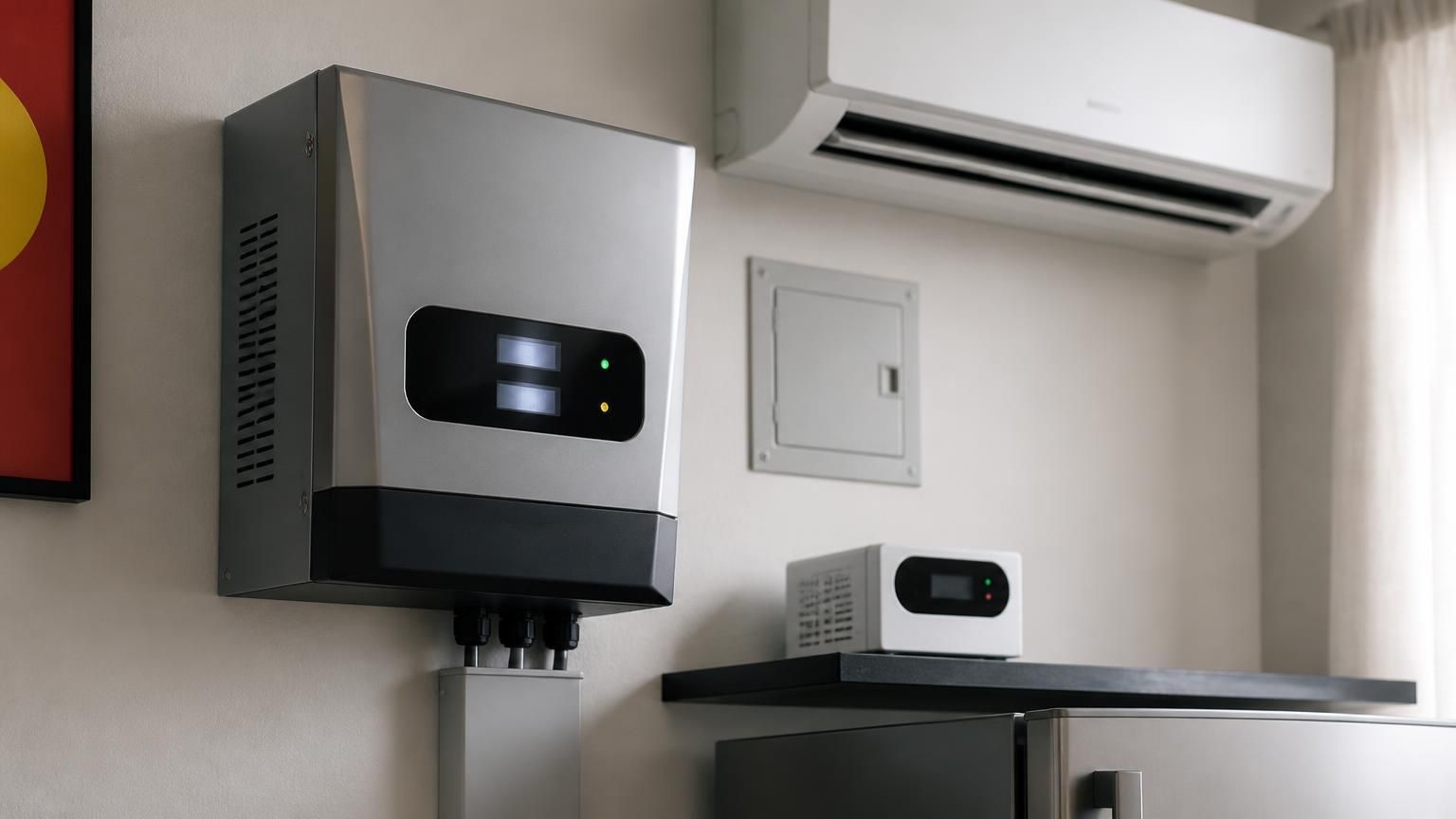
A voltage stabilizer is designed to keep the output voltage within a specified range when the incoming supply rises or falls. It can be useful where the local supply regularly goes outside an appliance's permitted operating range. But buying one with a familiar brand name or a large VA number is not enough. The stabilizer must match the appliance's load, starting current and the voltage fluctuations at the installation site.
The first question should be whether the appliance needs an external stabilizer at all. Some modern appliances have a specified operating range or built-in protection. Check the appliance manual before adding another electrical device to the circuit.
The short answer
- Read the appliance's rated voltage, current and power from its nameplate or manual.
- Match the stabilizer's working input range to the voltage actually experienced at your home.
- Size the stabilizer in VA or kVA for the load and its starting surge—not only the running watts.
- Check the output voltage, overload protection, high/low cut-off and delay features.
- Use a dedicated stabilizer for the appliance type it is designed for; do not connect unrelated high-load devices to it.
- Have fixed or high-power installations checked by a qualified electrician.
1. Do you need an external stabilizer?
Start with the appliance manual. Some appliances specify a wide permitted input-voltage range or include internal voltage protection. Others may require an external stabilizer under certain supply conditions.
Do not buy a stabilizer simply because a neighbour uses one. Record the voltage at your home over time using an appropriate meter or ask a qualified electrician to assess the supply. A stabilizer cannot fix every electrical problem: frequent outages, poor wiring, loose connections, earthing faults and lightning-related surges may require different protection.
2. Understand the working input range
A stabilizer's working range describes the incoming voltage band over which it can regulate the output as specified. For example, a unit with a stated range of 170–270V is not designed to provide its specified output when the input falls below or rises above that range.
Choose the range based on the actual low and high voltage conditions at your location and the appliance's permitted input. A wider range may be useful in an area with larger fluctuations, but it must still provide the output the appliance requires.
Check the following on the product datasheet:
- Minimum and maximum input voltage.
- Regulated output voltage and tolerance.
- Rated capacity in VA or kVA.
- Whether the unit cuts off outside its operating range.
- Restart delay and overload protection.
- Operating temperature and installation conditions.
Do not confuse a stabilizer's operating range with the appliance's own acceptable input-voltage range.
3. VA, kVA and watts explained
Stabilizers are commonly rated in volt-amperes (VA) or kilovolt-amperes (kVA). One kVA equals 1,000 VA. Watts measure real power, while VA represents apparent power. The relationship depends on power factor.
A rough residential sizing process is:
1. Read the appliance's rated current and voltage.
2. Estimate the apparent load using voltage × current where the nameplate provides those values.
3. Consider starting or surge current, especially for compressor-driven equipment.
4. Add an appropriate design margin based on the manufacturer's sizing guidance.
5. Confirm the final capacity against the stabilizer maker's chart for the exact appliance type.
V-Guard's buying guide advises checking voltage, current and power ratings, considering surge current, and allowing a margin when sizing. It also explains why VA and watts are not identical. Treat any simple percentage margin as an initial estimate, not a substitute for the appliance and stabilizer manufacturers' specifications.
4. Relay vs servo stabilizer
| Design | How it regulates | What to consider |
|---|---|---|
| Relay / electronic step stabilizer | Switches transformer taps using relays or electronic control | Regulation steps, switching behaviour, cut-off and load rating |
| Servo-motor stabilizer | Uses a motor-driven mechanism to adjust output more continuously | Response time, maintenance, duty rating and installation |
| Built-in appliance protection | Part of the appliance's own electronics | Manufacturer's voltage range and warranty conditions |
Relay stabilizers are commonly used for individual household appliances. Servo designs are used where their regulation characteristics suit the load and installation. Neither type is automatically best for every home.