India E-Commerce Rules 2027: What Online Shoppers Should Know Before 1 January
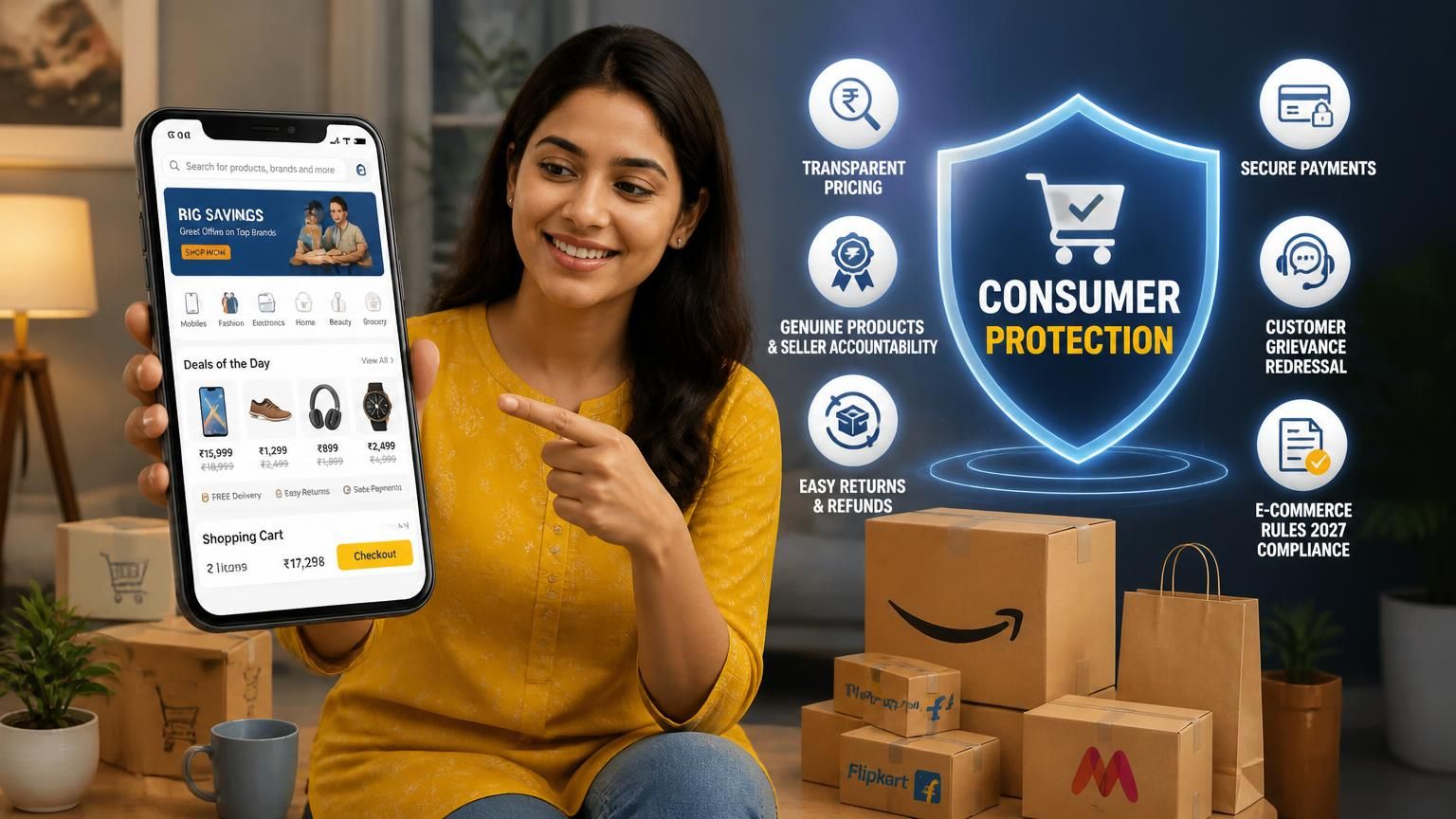
Online shopping in India is set for a regulatory update. The Ministry of Consumer Affairs notified the Consumer Protection (E-Commerce) (Amendment) Rules, 2026 on 9 September 2026. The amendments take effect on 1 January 2027 and address sponsored listings, price-reduction disclosures, seller information, grievance handling, search-result manipulation and dark patterns.
For shoppers, the practical takeaway is to look more closely at seller identity, promotional labels and the reference price shown with a discount.
When do the amended rules start?
The Gazette notification states that the amendments come into force on 1 January 2027. They amend the existing Consumer Protection (E-Commerce) Rules, 2020. The notification date is not the commencement date.
Official Gazette: https://consumeraffairs.gov.in/public/upload/files/E%20Commerce%20Amendment%20Rules%202026_1789128659.pdf
1. Sponsored listings must be clearly identified
The amended rules require sponsored listings of products and services to be distinctly identified through clear and prominent disclosure.
A sponsored placement may appear near the top of search results or inside a recommendation feed. It is not necessarily a poor product, but buyers should be able to tell when a listing is sponsored rather than simply presented because it best matches the search.
2. A price reduction must show the previous price
When an e-commerce entity or seller announces a price reduction, the amended rule requires the reduced price to be displayed along with the previous price.
The Gazette defines the previous price as the lowest price during the 30 days before the price reduction was announced.
This gives deal shoppers a more useful reference than relying only on a crossed-out MRP or a large discount badge. Still compare the actual current selling price across sellers and include delivery charges, coupons and eligible bank offers when calculating the final amount.
3. Seller and platform details must be accessible
The amendments require e-commerce entities to make specified platform information clear and accessible, including the entity's legal name, principal geographical address, website details and customer-care and grievance-officer contact information.
Marketplace seller details are also expanded, including business information and available consumer-service contact information, to help buyers make informed decisions before purchase.
For imported goods, the rules specify disclosure of the importer and the full country of origin, as provided under the Legal Metrology (Packaged Commodities) Rules, 2011.
4. Complaint acknowledgement and resolution timelines
The amended text states that the grievance officer must acknowledge a consumer complaint within 48 hours, provide a copy of the complaint as recorded, and redress it within one month from the date of receipt.
If you need to complain, keep the order confirmation, invoice, photographs, chat history and complaint reference number. A clear record helps establish what was ordered, what arrived and what remedy you requested.
5. Search manipulation and dark patterns
The amendments add a provision against manipulating search results or rankings in a way that misleads consumers, taking account of the consumer's search preferences.
They also require e-commerce entities to comply with the 2023 dark-pattern prevention guidelines and conduct an annual self-audit to keep their platforms free from dark patterns, displaying a certificate to that effect.
Dark patterns are interface practices that can steer people into choices they might not otherwise make. The rules strengthen obligations, but a confusing interface alone does not automatically establish a legal violation; the actual design and circumstances matter.
What shoppers should check
| Shopping situation | Practical check |
|---|---|
| Search results | Look for a clear sponsored label |
| Big discount banner | Compare the displayed previous price and other sellers |
| Marketplace purchase | Check seller name and available contact details |
| Imported product | Check country of origin and importer details |
| Complaint | Save invoice, screenshots and complaint reference |
| Checkout add-ons | Review preselected boxes, warranties and subscriptions |
| Urgency message | Verify the deal rather than rushing |
What the amendments do not automatically guarantee
- They do not guarantee every product will become cheaper.
- They do not mean every sponsored listing is a poor choice.
- They do not guarantee a refund for every complaint; outcomes depend on the facts and applicable law.
- They do not make every discount badge unlawful.
- They do not replace product warranties, return policies or other consumer protections.
The amendments improve disclosure and platform accountability, but shoppers should continue checking products, sellers, delivery terms and final invoices.