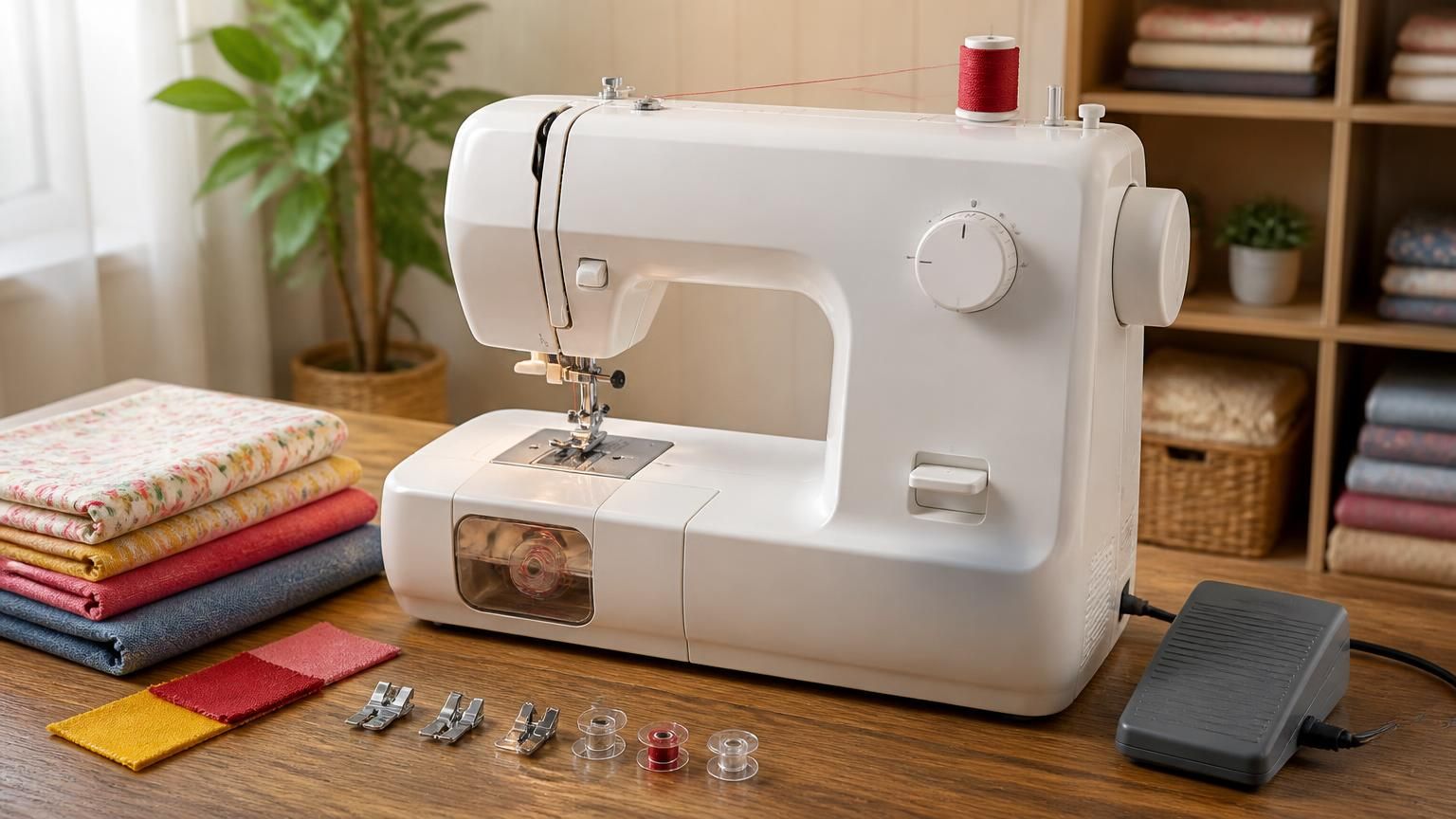
A machine may advertise dozens of stitch patterns, but some are variations of a basic stitch. Look at the actual stitch chart and ask whether the selection includes the utility stitches you need.
A machine with fewer patterns but adjustable stitch length and width may be more useful for ordinary garment work than a model with a large decorative library and limited adjustment.
One-step vs four-step buttonholes
A one-step buttonhole system completes the buttonhole sequence through one guided operation after the fabric and buttonhole foot are positioned correctly. A four-step system asks the user to change stages manually.
One-step can be more convenient for repeated garment sewing. Four-step can be adequate for occasional repairs. In both cases, practice on scrap fabric first; the foot, fabric stabiliser, thread tension and button size affect the result.
4. Stitch length, stitch width and thread tension
These controls influence the quality and appearance of the seam.
- Stitch length: controls the distance between needle penetrations. Shorter stitches can suit fine work; longer stitches can help with basting and some heavier materials.
- Stitch width: controls the side-to-side movement used for zigzag and other width-adjustable patterns.
- Thread tension: balances the upper thread and bobbin thread. Incorrect tension can create loops, puckering or thread breakage.
Check whether stitch length and width are independently adjustable and whether the settings are clearly marked. A beginner benefits from controls that are easy to understand and repeat.
Do not assume that the machine will automatically choose the correct tension for every fabric. Follow the manual and test on a scrap piece of the same fabric before sewing the finished garment.
5. Bobbin system: top-load vs front-load
The bobbin holds the lower thread. Domestic machines commonly use horizontal drop-in systems or vertical bobbin arrangements.
Horizontal / drop-in bobbin
The bobbin is placed into a compartment, often under a transparent cover. This can make the remaining thread easy to see and can simplify loading on compatible models.
Front-load / vertical bobbin
The bobbin sits in a removable bobbin case or holder, usually accessed through a front or side compartment. The loading and threading sequence differs by model.
Neither arrangement is automatically superior. Check:
- Whether the bobbin is easy to insert correctly.
- Whether the cover allows you to see the remaining thread.
- Whether spare bobbins are readily available.
- Whether the manual explains threading clearly.
- Whether the bobbin system is compatible with the accessories you may need.
Use the bobbin type specified for the exact machine. A similar-looking bobbin may have different dimensions or winding characteristics.
6. Feed dogs, presser foot and fabric handling
Feed dogs are the small toothed parts beneath the presser foot that move fabric through the machine. They work with the presser foot to keep the fabric moving evenly.
Useful features include:
- A stable feed system that moves fabric without frequent bunching.
- A presser foot that can be raised high enough for the fabrics you intend to use.
- Adjustable presser-foot pressure on models that provide it.
- A free arm for sewing circular items such as sleeves and trouser hems.
- A removable extension table or wide table for larger projects.
A machine may have several feed-dog rows, but the count alone is not a complete performance measure. The fabric, needle, thread, presser foot and machine settings all affect feeding.
7. Motor wattage and sewing speed: avoid misleading comparisons
A product page may publish motor wattage or maximum sewing speed in stitches per minute (SPM). These specifications describe different things.
- Wattage is an electrical power rating. It does not, by itself, tell you how well a machine will sew thick material.
- Maximum SPM describes a maximum operating speed, not the speed a beginner should use.
- Foot-pedal control determines how easily you can sew slowly and steadily.
- Motor and drive design influence how the machine behaves under load, but the manufacturer's fabric guidance is more useful than a single headline number.
For beginners, controllable low speed is often more valuable than the highest advertised speed. If you sew thicker fabrics, ask the manufacturer or dealer to demonstrate the exact machine with an appropriate needle, thread and sample fabric. Do not force multiple layers through the machine.
8. Needles, thread and fabric compatibility
A sewing machine is only one part of the sewing system. The needle and thread must match the fabric and the operation.
Before starting a project:
- Select a needle type and size suitable for the fabric.
- Use thread appropriate for the material and seam.
- Replace bent, blunt or damaged needles.
- Check that the presser foot is correct for the stitch and task.
- Test the upper threading, bobbin winding and tension on scrap fabric.
- Follow the manual when sewing stretch, delicate or heavy fabrics.
A domestic machine that handles ordinary cotton well may not be suitable for thick denim seams, leather or upholstery. Ask about the exact material and number of layers rather than relying on a broad “heavy duty” label.
9. Presser feet and included accessories
Presser feet are interchangeable attachments that help guide different sewing tasks. Common examples include:
- General-purpose foot.
- Zipper foot.
- Buttonhole foot.
- Blind-hem foot.
- Overcasting foot.
- Button-sewing foot.
- Quilting or walking foot, where compatible.
Check which feet are included and which are optional. A machine may support a useful attachment without including it in the box. Confirm compatibility by model number before purchasing accessories.
Also compare the included bobbins, needles, seam ripper, screwdriver, cleaning brush, spool caps, extension table, dust cover and foot controller. A longer accessories list is useful only if the items match the work you plan to do.
10. Domestic machine vs overlocker vs industrial machine
These machines are not interchangeable.
- A domestic sewing machine is a general-purpose tool for seams, hems and household projects.
- An overlocker / serger uses multiple threads and loopers to trim and finish fabric edges. A domestic machine's overcasting stitch is not the same as a dedicated overlocker.
- An industrial machine is often configured for a specific operation or material and may require a table, separate motor setup and specialised maintenance.
If you mainly want to sew garments at home, a domestic machine is the usual starting point. If you need professional edge finishing, compare a dedicated overlocker separately.
11. Warranty, service and spare parts in India
A sewing machine can remain useful for many years, so local service support is an important buying criterion.
Before checkout, confirm:
- The exact model and India warranty.
- Whether the warranty is carry-in or includes home service.
- The location of an authorised service centre.
- Availability of needles, bobbins, belts, presser feet and other parts.
- Whether the manual and support videos are available.
- Whether the seller provides a GST invoice and a clear return policy.
Do not assume that a brand's service network is equally accessible in every city. Check the service location nearest to you before choosing a model.
12. Examples of how to compare real specifications
Manufacturer specification pages show why it is worth comparing features rather than relying on the model name.
For example, Brother India's GS2700 specification page lists 27 built-in stitches, adjustable stitch length and width, a horizontal bobbin, a one-step buttonhole, 800 stitches per minute and a two-year carry-in warranty. Its GS3750WT page lists 37 built-in stitches and a wide table as included. These are examples of published model specifications, not a recommendation or a claim that one model suits every project.
Singer India's M 2605 product page lists a 70 W motor, 19 built-in stitches and 32 stitch functions. The different ways manufacturers present stitch counts show why buyers should inspect the actual stitch chart and controls.
13. A practical buying checklist
Before choosing a machine, answer these questions:
- What will I sew most often: repairs, hems, garments, crafts or quilting?
- Does the machine include straight and zigzag stitches?
- Can I adjust stitch length and width?
- Is the buttonhole one-step or multi-step?
- Is the bobbin system easy to load and supported with spare parts?
- Is the presser foot suitable for the fabric thickness I expect to use?
- Does it have a free arm?
- Are the required presser feet included?
- Can I control speed accurately with the foot pedal?
- Is the machine domestic, overlocker or industrial?
- Is there authorised service nearby?
- What exactly does the India warranty cover?
Frequently asked questions
Is a mechanical sewing machine better for beginners?
A mechanical-control machine can be a straightforward way to learn because stitch selection and adjustment are handled through physical controls. A computerised machine may be easier for some tasks if it offers useful automation. Choose based on the projects and controls you will use.
How many stitches should a home sewing machine have?
There is no ideal number. Straight stitch, zigzag, useful stretch stitches and a workable buttonhole cover many household tasks. Compare the actual stitch chart, adjustability and presser feet rather than buying by stitch count alone.
Is a 70 W sewing machine more powerful than a 50 W model?
The wattage figure alone does not establish sewing performance or fabric capacity. Motor design, drive system, needle, thread, presser foot and fabric all matter. Check the manufacturer's material guidance and test the exact machine if possible.
Can a domestic sewing machine sew denim?
Some domestic models can handle selected denim projects with the correct needle and settings, but not every machine can sew thick seams or multiple layers. Check the manufacturer's guidance and test on scrap material. Do not force the motor or handwheel.
What is the difference between a sewing machine and an overlocker?
A sewing machine forms seams and stitches using a needle and bobbin or other stitch-forming system. An overlocker uses loopers and multiple threads to trim and finish fabric edges. An overcasting stitch on a domestic machine is not identical to a dedicated overlocker.
Is a one-step buttonhole worth paying extra for?
It can save time if you sew garments and make buttonholes regularly. For occasional repairs, a four-step system may be sufficient. The quality of the finished buttonhole still depends on setup, fabric and practice.
Final verdict
Choose a sewing machine by the projects you actually intend to make. For basic repairs and learning, prioritise reliable straight and zigzag stitching, adjustable length and width, a manageable bobbin system, a controllable foot pedal and accessible service support. Move to a computerised model when its automation and additional stitch options solve real needs.
Do not confuse stitch count, wattage or the words “heavy duty” with proven fabric capability. Check the exact model's specifications, accessories, warranty and local service availability—and test it with the right needle, thread and fabric before beginning an important project.
Sources and further reading
Research checked: 23 November 2026. Model specifications, included accessories, warranty terms and service availability can change; confirm the exact India model before purchase.