Down is valued for its loft and ability to trap warm air with relatively low weight. Fill power describes the lofting capacity of down under a specified test; it is not a direct temperature rating. A higher fill-power number can provide a given amount of loft with less fill weight, but the total fill quantity, bag construction, fit and shell design also matter.
Check whether the listing states fill power, fill weight and down composition. A claim such as “premium down” without those details is not enough to compare models. Ask whether the down has a water-resistant treatment and what the manufacturer recommends for damp conditions.
Down can be a good choice for weight-conscious trekking when the bag can be kept dry. It is not automatically the best choice for humid or wet trips if the owner lacks a reliable way to protect and dry it.
Synthetic fill
Synthetic insulation is often more practical for occasional camping, damp conditions and buyers who want a lower initial cost. It can be less compressible and heavier than down for comparable warmth, but it may be easier to manage when exposed to moisture.
Synthetic fills differ in fibre structure and construction. Check the manufacturer's insulation description, total fill weight, care instructions and temperature rating. A thick-looking bag is not proof of a particular warmth level.
4. Mummy, rectangular and semi-rectangular shapes
The shape affects warmth, comfort and packed size. A close-fitting bag has less unused air space to warm, while a roomy design can feel more comfortable for people who move during sleep.
| Shape | Advantages | Trade-offs |
|---|
| Mummy | Close fit, often lower weight and efficient insulation | Restricts movement for some sleepers |
| Rectangular | More room to move; can feel familiar and comfortable | Larger packed size and more air space to warm |
| Semi-rectangular | Middle ground between room and thermal efficiency | Still requires checking shoulder and foot dimensions |
| Double sleeping bag | Shared space for two people | Larger, heavier and less flexible for solo use |
A mummy bag can be efficient for trekking, but check the shoulder, hip and foot widths. If it is too tight, the insulation may be compressed and comfort reduced. A rectangular bag may be preferable for relaxed car camping in mild conditions.
Some bags can be zipped together. This requires compatible zip type, length, direction and model design. Do not assume two bags from the same brand can be joined.
5. Size and fit: length, shoulder and foot room
Check the manufacturer's recommended user height and the internal dimensions. A bag that is too short can compress insulation around the feet. A bag that is much too long can leave excess space that takes longer to warm. Width matters too: a narrow shoulder area may restrict movement, while a very roomy bag can reduce thermal efficiency.
Look for:
- Maximum recommended user height.
- Shoulder width.
- Hip width.
- Foot-box width.
- Internal length and shape.
- Whether the hood fits comfortably.
- Whether the zip can be opened without snagging.
Try the bag in a store if possible, wearing the type of base layer you expect to use outdoors. Check that you can bend your knees, turn and adjust the hood without compressing the insulation excessively. If you are between sizes, compare the actual dimensions rather than relying on a generic small/medium/large label.
6. Hood, draft collar and zip baffles
In cooler conditions, heat can escape through the head opening and along the zip. A shaped hood with an adjustable drawcord can reduce the opening around the face. A draft collar helps reduce warm air escaping around the shoulders, while a zip baffle covers the zipper area.
Check whether the hood can be adjusted from inside the bag and whether the drawcord is easy to distinguish by touch. A poorly designed cord can be uncomfortable near the face. The draft collar should close without restricting breathing or movement.
A full-length zip provides more ventilation and can make the bag easier to enter. A shorter zip may reduce weight but restrict airflow. Some models include a two-way zip so the foot area can be opened separately. This can help regulate temperature in mild conditions.
7. Shell and lining fabrics
The outer shell protects insulation from abrasion and some moisture. The lining affects feel and comfort against clothing. Fabrics may be nylon or polyester in different weights and weaves. A higher denier number generally describes a heavier yarn, but it does not by itself guarantee overall durability or water resistance.
Check the product details for:
- Shell fabric and denier, if stated.
- Water-repellent treatment and its limitations.
- Lining material and texture.
- Stitching and baffle construction.
- Zip brand or type, if specified.
- Repair options for fabric, seams and zips.
A water-repellent finish can help with light condensation or brief exposure, but a sleeping bag is not a waterproof shelter. Use a suitable dry bag or pack liner for transport, and keep the bag protected inside the tent.
8. Baffle construction and cold spots
Insulation needs to stay distributed rather than shifting into clumps. Baffles are fabric compartments or construction channels that help keep fill in place. Different designs manage insulation differently, including stitched-through construction and box-baffle arrangements.
Stitched-through seams can create thinner areas where the inner and outer fabric are joined. Box-baffle designs can help reduce some cold spots but may add weight and cost. The actual performance depends on the whole construction and tested temperature rating.
Ask whether the insulation is evenly distributed around the body and whether the foot box and hood receive additional fill. Check the bag for loose stitching, uneven fill and areas that feel thin. A product photograph cannot show every construction detail, so consult the technical description or manual.
9. Packed size and weight
For trekking, total carried weight and packed volume can matter as much as warmth. Compare the complete packed weight, including storage sack if the manufacturer lists it, and check the compressed dimensions. Some brands quote a compressed size that requires a separate compression sack.
Do not store a down or synthetic bag compressed for long periods unless the manufacturer specifically permits it. Long-term compression can reduce loft. A storage sack that allows the bag to remain loose is often supplied or recommended.
For car camping, packed size may be less important than comfort. For backpacking, consider whether the bag fits inside your pack with a sleeping mat, clothing, food and other gear. A very compact bag may be tempting, but not if its rating is unsuitable for the coldest night.
10. Sleeping mat and ground insulation
A sleeping bag does not provide all the insulation needed between your body and the ground. Body weight compresses the insulation underneath, reducing its ability to trap air. A suitable sleeping mat provides important ground insulation and comfort.
Check the mat's R-value or other insulation information and match it to expected ground temperatures. The sleeping bag rating is generally tested as part of a system that includes a reference mat and controlled clothing conditions; it should not be treated as independent of the sleeping surface.
A warm bag on a thin uninsulated mat can still leave you cold. For cold-weather trips, use a mat with suitable insulation and consider a closed-cell foam layer if recommended by experienced outdoor guidance. Do not rely on cardboard, loose blankets or improvised materials as a substitute for a properly rated sleeping mat in severe cold.
11. Liner, base layers and ventilation
A sleeping bag liner can help keep the bag clean and may add some warmth depending on its material and construction. It can also make it easier to wash the liner frequently rather than the entire sleeping bag. However, a liner's claimed temperature improvement should be treated as model-specific and not added automatically to the bag's rating.
Wear dry base layers suitable for the conditions. Avoid going to sleep in damp clothing. A warm hat or suitable socks may improve comfort, but do not wear so many layers that the bag is compressed or circulation is restricted.
In warmer conditions, open the zip, use the foot vent if available or use the bag as a quilt if its design permits. Do not assume a low temperature rating will make a bag comfortable in hot, humid weather.
12. Moisture, humidity and monsoon travel
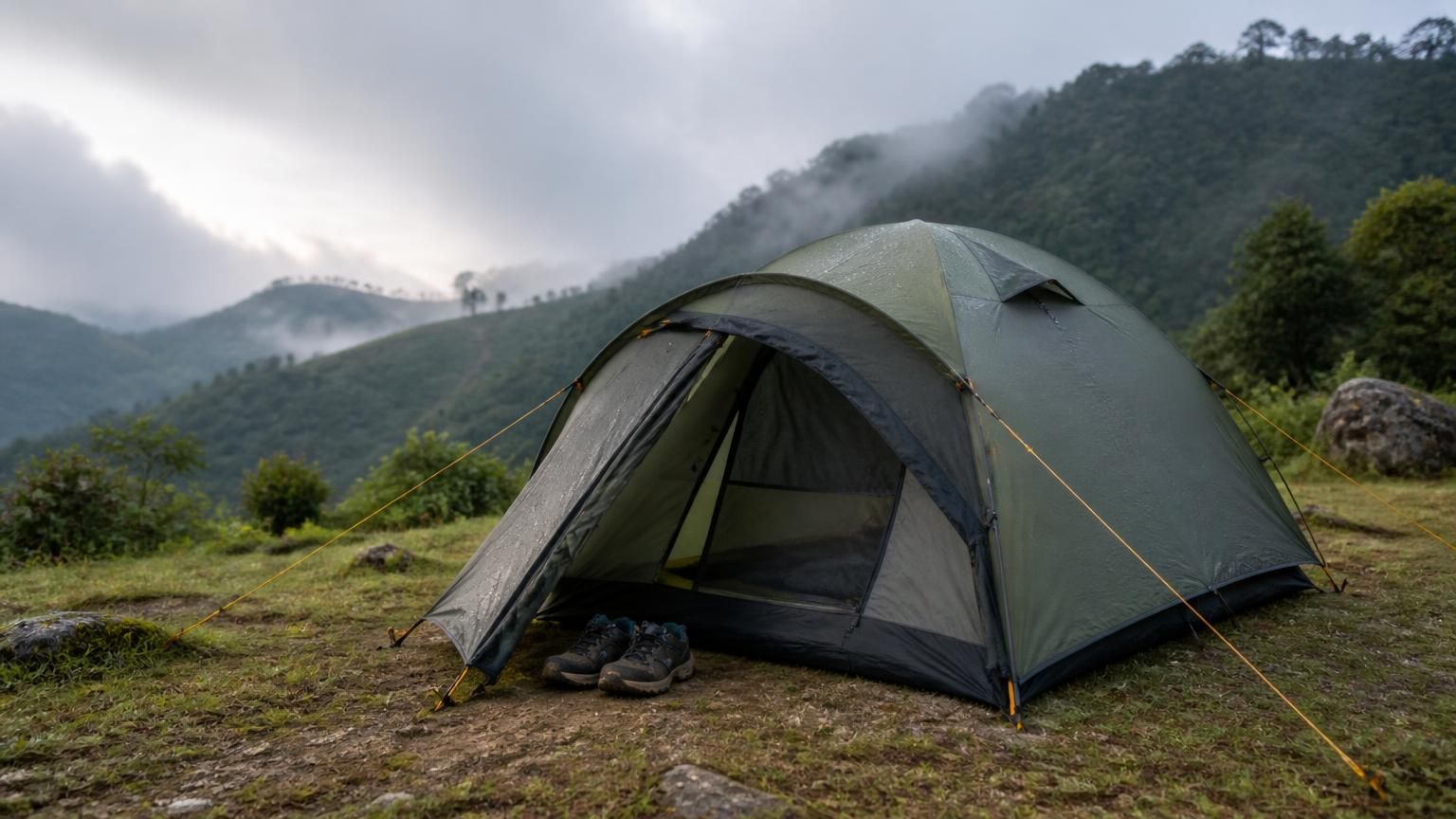
Moisture reduces comfort and can damage insulation if a bag remains damp. In humid Indian conditions, allow the bag to air after use and dry it fully before long-term storage. Keep it away from wet tent walls and groundsheet condensation.
A waterproof pack liner or dry bag can protect the sleeping bag while travelling. If the bag becomes damp, follow the manufacturer's drying instructions. Do not place it directly against a high-temperature heater or in strong direct sunlight for prolonged periods unless the manufacturer permits that method.
Down bags need particular care when wet because loss of loft can significantly reduce insulation. Synthetic bags may tolerate damp conditions better, but they still need to be dried to prevent odour and material deterioration.
13. Washing and long-term care
Wash a sleeping bag only when necessary and follow the care label. Down and synthetic bags may require different detergents, washing machines and drying methods. A large bag may need a front-loading machine with sufficient drum capacity or a specialist cleaning service.
Avoid ordinary fabric softener unless the manufacturer explicitly allows it. It can affect fabric or insulation performance. Make sure the bag is fully dry before storage; damp insulation can develop odour and mould.
Store the bag loosely in a large storage sack or hang it as instructed. Use a compression sack for transport only. Keep zips clean and lubricate them only with approved products. Repair small tears promptly using compatible patches or authorised service.
14. Fit the bag to the Indian destination
India includes warm coastal areas, hot plains, cool hill stations, high-altitude regions and places with large day-night temperature changes. There is no single sleeping bag suitable for all these conditions.
| Trip type | What to prioritise | Additional planning |
|---|
| Warm coastal or plains camping | Breathable, lighter bag or quilt-style option | Ventilation and insect protection |
| Mild hill-station camping | Comfort rating matched to forecast | Insulated mat and dry clothing |
| Cold winter hill camping | Lower comfort rating and suitable ground insulation | Weather forecast, shelter and backup layers |
| High-altitude or technical trip | Specialist equipment selected for the actual route and conditions | Expert advice and emergency planning |
| Multi-season car camping | Versatile bag with zip ventilation or layering | Storage space and drying after trips |
Do not use a recreational sleeping bag for a technical expedition simply because its extreme rating looks low. Specialist conditions may require a different design, tested performance and a broader cold-weather system.
15. Compare labels, standards and seller claims
A credible listing should identify the temperature rating, insulation type, dimensions, total weight, packed size and care instructions. If the seller claims ISO 23537 testing, check whether the exact model is covered and whether the label distinguishes comfort, limit and extreme figures.
ISO 23537-1:2022 covers adult-sized leisure sleeping bags designed for limit temperatures of -20°C and higher. It sets out test methods and labelling requirements for thermal characteristics, dimensions and mass. It does not cover children's or babies' sleeping bags, nor every specialist expedition product.
Be cautious of listings that display only an “extreme” temperature, claim a bag is suitable for all seasons without conditions, or omit insulation and dimensions. Ask for the product label or technical sheet before purchase.
16. Common buying mistakes
Choosing by extreme temperature: It is not a comfort rating and can represent a dangerous boundary.
Ignoring the sleeping mat: Ground heat loss can make an otherwise warm bag feel inadequate.
Buying a tight bag: Compressed insulation and restricted movement can reduce comfort.
Choosing down without moisture planning: Wet down can lose loft and needs careful drying.
Assuming fill power equals warmth: Total fill quantity and construction also matter.
Buying for average temperature: Night-time lows and campsite exposure matter more.
Storing the bag compressed: Long-term compression can reduce loft.
Ignoring the standard: A temperature claim without a test method is difficult to compare.
17. Questions to ask before paying
- Is the temperature rating tested to ISO 23537 or another stated method?
- Are comfort, limit and extreme temperatures shown separately?
- What is the insulation type and total fill weight?
- If down, what is the fill power and down composition?
- What are the maximum user height and internal widths?
- What are the total weight and packed dimensions?
- Is the shape mummy, rectangular or semi-rectangular?
- Does it have a hood, draft collar and zip baffle?
- Can the zip open from the foot end?
- What sleeping mat is assumed for the rating?
- What are the washing and long-term storage instructions?
- What is covered by the warranty and repair service?
Purchase checklist
- [ ] Check the coldest expected night at the actual campsite.
- [ ] Prioritise comfort temperature, not extreme temperature.
- [ ] Verify the test standard and exact model.
- [ ] Choose down or synthetic based on weight and moisture needs.
- [ ] Check shoulder, hip and foot-box dimensions.
- [ ] Confirm hood, draft collar and zip arrangement.
- [ ] Compare total weight and packed size.
- [ ] Plan a suitable insulated sleeping mat.
- [ ] Protect the bag from rain and condensation.
- [ ] Follow washing and loose-storage instructions.
- [ ] Avoid using a recreational bag for specialist expedition conditions.
Frequently asked questions
What does a sleeping bag comfort rating mean?
Under ISO 23537 terminology, comfort temperature is the lower end of the comfort range for a user in a relaxed posture. It is different from the limit and extreme temperatures. Check the exact standard and label for the model.
Should I buy a bag based on its extreme temperature?
No. The extreme figure represents a very low temperature where hypothermia risk is possible; it is not a normal comfort target. Choose using the comfort rating and suitable safety margin.
Is down warmer than synthetic insulation?
Down often provides a better warmth-to-weight ratio and compresses smaller, but it can lose loft when wet. Synthetic insulation is often heavier and bulkier but can be more forgiving in damp conditions. The bag's full construction and rating matter.
Do I need a sleeping mat with a sleeping bag?
Yes. The bag's insulation is compressed underneath your body, so a suitable mat provides important ground insulation. Match mat insulation to the expected conditions.
Can I use one sleeping bag throughout India?
Not comfortably in every climate. Warm coastal nights, mild hill stations and cold high-altitude camps have different needs. Consider separate bags or a modular system if your trips vary widely.
Can I wash a sleeping bag in a home washing machine?
Only if the care label and machine capacity permit it. Down and synthetic bags may need different detergents and drying procedures. Follow the manufacturer or use a specialist cleaner.
How should I store a sleeping bag?
Dry it fully and store it loosely in a large sack or as the manufacturer directs. Use compression only for transport, not long-term storage unless the maker explicitly allows it.
Final verdict
Choose a sleeping bag by matching its tested comfort rating, insulation type, fit and packed size to the coldest expected night and the way you travel. Understand the difference between comfort, limit and extreme figures, and remember that a sleeping mat is part of the insulation system. Down can save weight when kept dry; synthetic fill can be practical for damp conditions and lower-cost use. Check the exact model's standard, dimensions and care instructions before buying, and never treat a recreational bag's extreme rating as a safe plan for severe cold.