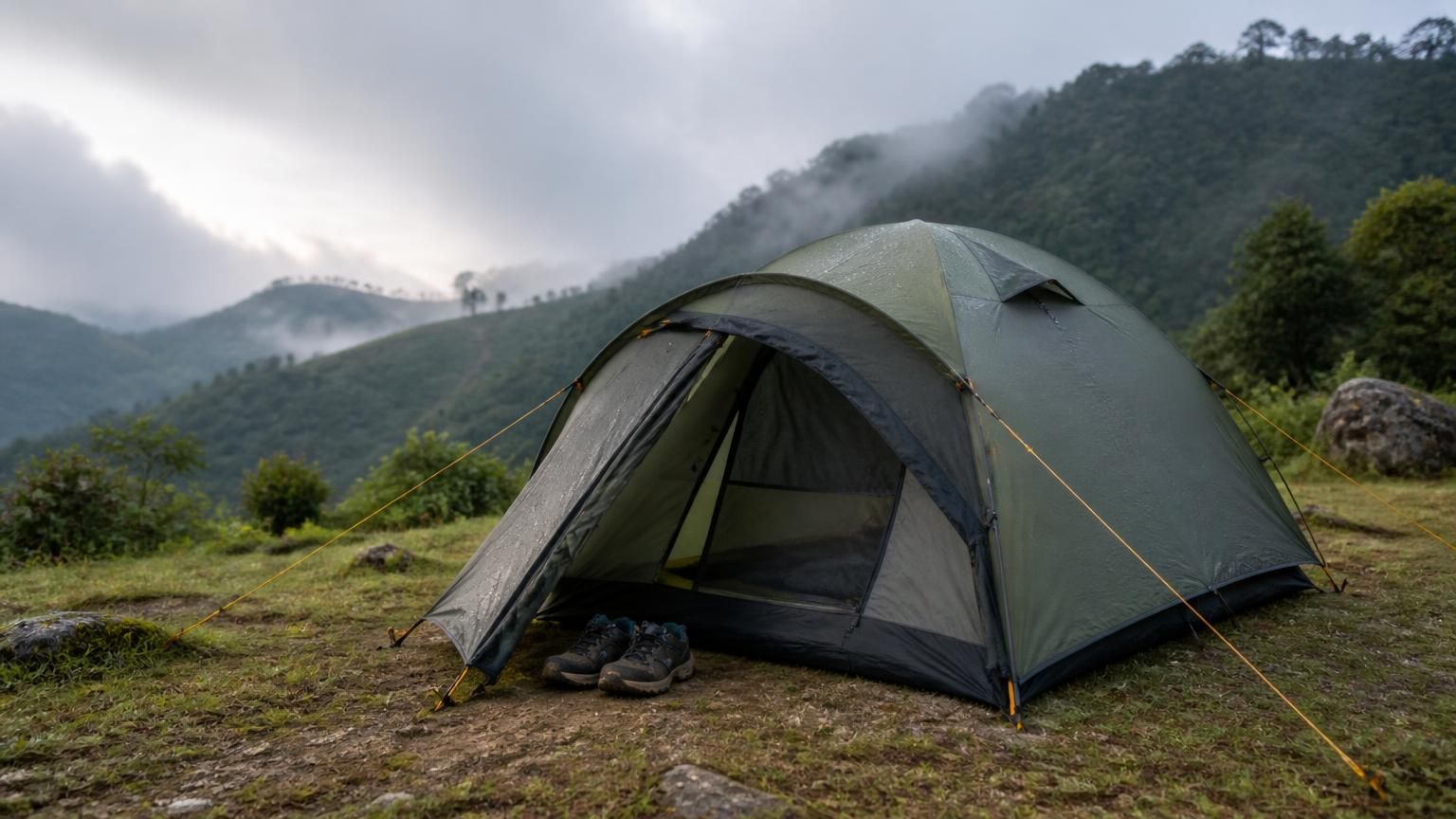
Indian retail listings may show different ratings for the flysheet and groundsheet. Read both. A waterproof flysheet does not help if water pools beneath the tent and enters through a weak floor or poorly protected floor seams.
| Listing detail | What it tells you | What it does not prove |
|---|
| Flysheet hydrostatic head | Water resistance of the outer fabric sample | That every seam and zip is waterproof |
| Groundsheet rating | Water resistance of the floor material | That water cannot enter around the door or floor edge |
| Taped seams | Seams have a sealing treatment | That tape remains intact after wear or poor storage |
| Full-coverage rainfly | More of the inner tent is shielded | That wind-driven rain cannot reach every opening |
| Water-resistant coating | A treatment has been applied | That the coating will last forever |
Decathlon's India tent range illustrates why buyers should inspect model-specific specifications rather than rely on a generic category label. Its product listings identify flysheet and groundsheet ratings separately for individual tents. Always check the current manual and listing for the exact model you intend to purchase.
Seams, zips and rainfly design
Stitching creates small holes in fabric. Taped or otherwise sealed seams help reduce water entry, but the quality and condition of the treatment matter. Inspect the inside of the flysheet and floor seams where accessible. If the product has a partial rain cover, check whether the door and ventilation panels remain protected when rain arrives at an angle.
A full-coverage flysheet can create a sheltered gap between the outer and inner tent. This helps protect the inner sleeping compartment and may provide a vestibule for footwear. A single-wall tent has a different condensation and ventilation trade-off, so understand the design rather than comparing only the waterproof number.
Zips should move smoothly without catching fabric. Rain flaps and storm flaps can reduce direct exposure, but they need to be closed and positioned correctly. Ask whether replacement zip sliders, poles or flysheet parts are available.
4. Groundsheet and site drainage matter as much as the flysheet
Water can enter a tent from below if the site is poorly chosen. Avoid depressions, dry stream beds, drainage channels and low points where rainwater may collect. Pitch on ground that drains naturally and is not likely to become a puddle after a shower. Do not dig trenches around a campsite unless the site rules explicitly permit it; altering the ground can damage the environment and may be prohibited.
A bathtub-style groundsheet rises up the sides of the inner tent, reducing the chance of shallow surface water entering at the floor edge. It does not make a tent safe to pitch in a flood-prone location. Check whether the floor is integrated or detachable, and whether the manufacturer recommends a footprint or groundsheet protector.
A separate footprint can protect the floor from abrasion and punctures, but it must not extend beyond the tent floor in a way that collects rainwater underneath. Use the correctly sized accessory or follow the manufacturer's instructions. A plastic sheet that sticks out around the tent can channel water under the floor rather than keeping it away.
5. Ventilation and condensation in Indian conditions
Warm, humid nights and coastal conditions make ventilation important. People release moisture while breathing, and wet clothing or damp ground can add more. When warm moist air meets a cooler tent surface, condensation can form on the inside. This can happen even when the tent has no leak.
Look for mesh panels, high and low vents, adjustable openings and a rainfly arrangement that allows airflow while protecting the sleeping compartment. Two doors may improve ventilation if the design allows them to be opened safely. Keep vents clear of luggage and avoid covering mesh panels with clothing.
A tent that is fully sealed may feel warmer and more humid. A tent with extensive mesh can be comfortable in mild weather but may need a well-designed flysheet when rain or wind arrives. The best arrangement depends on the destination and forecast. Ventilation is not a substitute for rain protection; both must work together.
Reducing condensation
- Choose a ventilated pitch and keep the designated vents open when conditions permit.
- Avoid drying wet clothes inside the sleeping compartment.
- Keep damp footwear and cooking equipment in a vestibule or separate shelter.
- Do not block mesh panels with bags or sleeping mats.
- Wipe condensation gently and dry the tent fully after the trip.
- Follow the manufacturer's guidance for rainfly tension and vent adjustment.
Do not cook inside an enclosed tent. Stoves and fuel-burning appliances can create carbon monoxide, fire and burn hazards. Use a designated outdoor cooking area with safe separation from fabric and sleeping equipment.
6. Poles, frame design and wind stability
Tent poles determine how the shelter holds its shape. Fibreglass poles are common in entry-level recreational tents and can be economical, while aluminium poles are often used where lower weight and flexibility are important. Material alone does not tell you whether a tent is suitable for strong wind; pole diameter, geometry, joints, fabric tension, guy points and correct anchoring all matter.
Dome tents are familiar and can be relatively straightforward to pitch. Tunnel designs can provide useful interior volume but often rely on correct staking and tension. Freestanding tents can hold their shape without every stake being installed, but they may still need guy lines for safe use in wind. Pop-up tents can be fast to deploy, yet their folded shape and anchoring needs may make them less convenient for backpacking.
Check the pole replacement process. Are poles supplied as a complete set, can individual segments be replaced and is a repair sleeve available? A small pole repair sleeve and compatible spare cord can be useful on longer trips, but repairs should follow the manufacturer's instructions.
Wind claims and anchoring
A wind-resistance figure on a product page is meaningful only when you understand the test conditions and pitching method. Do not treat a claimed wind speed as a guarantee for a gusty ridge, exposed beach or storm. Use all required guy lines, orient the tent as instructed and select a sheltered campsite that does not expose you to falling branches or flash-flood risk.
Stakes need to suit the ground. Standard pegs may work in firm soil but can pull out of loose sand or gravel. Use suitable sand anchors or approved alternatives where permitted. Never tie guy lines to unstable objects, trees with damaging straps or structures that may move.
7. Weight and packed dimensions
For trekking, packed weight can matter more than interior luxury. Check whether the advertised weight is minimum weight, trail weight or total packed weight. Some listings exclude pegs, repair items, footprint or storage bag. Compare like with like.
Also check the packed length and diameter. A tent that is light but too long for your backpack may be awkward to carry. Car campers can usually accept a larger pack size, while trekkers should consider how the tent divides between group members and whether poles can be carried separately.
A lower weight may come from thinner fabrics, smaller poles or a simpler design. That does not automatically make the tent poor, but it changes the care required. Ask about abrasion resistance, repair options and the manufacturer's intended use.
8. Pitching system: practice before the trip
A tent may be advertised as quick to pitch, but the process still needs to be understood. Identify whether poles thread through sleeves, clip onto the inner tent or form an integrated frame. Check whether one person can pitch it safely and whether the flysheet can be attached without exposing the inner tent to rain.
Pop-up mechanisms may be convenient for casual use, but folding them back into the storage shape can require practice. Watch the manufacturer's instructions and rehearse at home before travelling. Do not force poles or hinges; a bent segment can fail later.
A freestanding design can be moved after assembly, but final staking and guying remain important. A non-freestanding tent may be lighter but needs suitable ground and secure anchors. Check the exact model manual rather than assuming every tent in a product family pitches the same way.
9. Doors, vestibules and storage
One door may be adequate for a solo shelter, while two doors can make access easier for two occupants. A vestibule is a covered space outside the inner sleeping area where footwear and some gear can be stored. Its usable size depends on the flysheet design and pole geometry.
Check whether the vestibule can be opened without exposing the sleeping compartment to direct rain. Look for internal pockets, a hanging loop and a lantern attachment point if these are useful to you. These details do not replace the basic requirements of weather protection and safe pitching, but they can improve daily use.
Keep wet gear separate from sleeping bags and clothing. Do not store food inside the tent where it may attract animals. Follow campsite food-storage rules and local wildlife guidance.
10. Fabric, UV exposure and care
Tent fabrics and coatings degrade with sunlight, heat, abrasion, dirt and repeated folding. A tent left packed while damp can develop mildew and unpleasant odours. After a trip, dry the tent completely in shade or as directed by the manufacturer, clean it with approved methods and store it loosely in a cool, dry place.
Do not machine-wash a tent or apply household detergents, solvents or waterproofing sprays without checking the manufacturer's care instructions. Strong cleaners can damage coatings and seam treatments. Avoid dragging the tent across rough ground and keep sharp objects away from the floor.
For Indian summer use, consider shade and ventilation as well as UV-resistant fabric claims. A dark inner fabric or blackout technology may reduce early-morning light, but it does not remove the need for airflow or safe temperature management. Never leave children or pets inside a closed tent in hot conditions.
11. Tent shape and interior comfort
Dome tents often provide a balance of stability and straightforward pitching. Tunnel tents can provide more usable length and vestibule space but require correct orientation and anchoring. Cabin-style family tents may offer more headroom and vertical walls, making them comfortable for car camping, but their larger surface area can catch wind and their footprint may not fit every campsite.
Check the interior height where occupants will sit, not just the single maximum figure. Consider the door height, sleeping mat placement and whether the roof slopes into the occupants' head space. A tent can have a large floor footprint and still feel cramped if the side walls taper quickly.
If you plan to spend time inside during rain, a covered vestibule or separate shelter can make a meaningful difference. However, never use the vestibule as an enclosed cooking room unless the equipment manufacturer explicitly permits that arrangement and adequate ventilation and clearances are maintained. The safest default is to cook outdoors in a designated area.
12. What accessories are actually useful?
Accessories should solve a specific problem and be compatible with the tent.
| Accessory | Purpose | Buying check |
|---|
| Footprint | Protects the tent floor from abrasion | Correct size and compatibility |
| Extra pegs | Anchoring in different ground conditions | Peg type suits soil and site rules |
| Guy lines | Adds stability when correctly installed | Attachment points and reflective visibility |
| Repair sleeve | Temporary pole repair | Correct diameter and manufacturer guidance |
| Mallet | Helps install suitable pegs | Use carefully; do not damage pegs |
| Ground mat | Keeps dirt outside the sleeping area | Does not channel rain beneath tent |
| Lantern hook | Holds a small light | Weight limit and safe lighting type |
Do not buy a generic accessory simply because it appears in a bundle photograph. Verify dimensions, attachment points and material compatibility. A footprint that is too large can collect rainwater, and an unsuitable peg can fail in loose ground.
13. Safety and campsite selection
Choose an established campsite where possible and follow local rules. Avoid camping under dead branches, near unstable slopes, on riverbanks exposed to sudden rises, in drainage channels or in areas where lightning and high winds create unacceptable risk. Check the weather forecast and have a plan to leave if conditions deteriorate.
Keep exits clear and do not use open flames inside the tent. Use battery-powered lighting designed for camping. Store fuel outside sleeping areas and follow the stove manufacturer's instructions. Keep sharp tools and hot equipment away from tent fabric.
Children should be supervised around guy lines, pegs and zips. Reflective guy lines can reduce trip hazards in low light. Do not block the door with luggage. In wildlife areas, follow official food-storage and waste-disposal instructions.
14. Compare price and warranty fairly
A low-priced tent may be appropriate for occasional fair-weather use, but compare the specification and included accessories. A higher price may reflect lower weight, better poles, more durable fabric, improved seam construction or a stronger service network. It does not guarantee that the tent is right for your trip.
Check the exact model number, warranty period, exclusions, repair process and availability of poles, clips, pegs and flysheet parts. Ask whether the warranty covers manufacturing defects only or also includes certain forms of repair. Normal wear, misuse, storm damage and incorrect pitching may be excluded.
Read current retailer terms before purchase. Product listings, prices, colours and stock can change. Do not rely on a third-party price screenshot or an old review to confirm today's offer.
15. A practical comparison method
Create a shortlist of two or three models and compare them on the same basis:
1. Internal floor dimensions and usable height.
2. Total packed weight and packed size.
3. Flysheet and groundsheet waterproof ratings.
4. Seam treatment and rainfly coverage.
5. Ventilation openings and door arrangement.
6. Pole material, geometry and replacement support.
7. Pitching time and number of people required.
8. Vestibule space and storage details.
9. Included footprint, pegs and repair accessories.
10. Warranty and local service availability.
If a product page omits one of these details, ask the seller or download the official manual. Do not fill gaps by assuming that a more expensive model includes better materials or that all models in a range share the same design.
16. Questions to ask before paying
- Is the listed capacity comfortable for my group and sleeping mats?
- What are the internal floor dimensions and usable peak height?
- Are flysheet and groundsheet waterproof ratings stated separately?
- Are seams taped or otherwise sealed?
- Does the flysheet cover the inner tent fully?
- How many doors and ventilation openings are provided?
- What are the total packed weight and packed dimensions?
- What pole material and frame design are used?
- Can individual pole sections and clips be replaced?
- Is a footprint included or sold separately?
- Can one person pitch the tent, and can I practise the process?
- What are the warranty exclusions and repair options?
Purchase checklist
- [ ] Match the tent to car camping, family use or trekking.
- [ ] Check real floor dimensions and sleeping-mat fit.
- [ ] Compare flysheet and groundsheet ratings separately.
- [ ] Inspect seam treatment, zips and rainfly coverage.
- [ ] Check ventilation and condensation management.
- [ ] Confirm pole design, anchoring and replacement support.
- [ ] Compare packed weight and packed dimensions.
- [ ] Check vestibule, doors and storage features.
- [ ] Confirm accessories and warranty details.
- [ ] Practise pitching and folding at home.
- [ ] Plan a safe campsite and a method for drying the tent.
Frequently asked questions
What size camping tent should I buy?
Start with the number and size of sleeping mats, then compare the actual floor dimensions. A tent rated for two people may fit two adults closely with little room for luggage. Consider a larger capacity if comfort and storage matter.
What waterproof rating is enough for India?
There is no single rating that guarantees performance in every Indian climate. Compare the flysheet and groundsheet separately, check seam sealing and rainfly coverage, and consider the destination, expected rain and campsite drainage.
Is a pop-up tent suitable for trekking?
It may be convenient for casual camping, but packed size, weight, wind anchoring and folding method can make it less practical for backpacking. Check the exact model and intended use.
Why does water appear inside a tent even when it has not leaked?
Condensation can form when warm moist air meets a cooler tent surface. Improve ventilation, keep wet gear separate and dry the tent properly after use.
Do I need a footprint?
A compatible footprint can protect the floor from abrasion and punctures. It must be correctly sized and used as instructed so it does not collect rainwater under the tent.
Can I cook inside a tent vestibule?
Do not cook inside an enclosed sleeping tent. Fuel-burning appliances can create carbon monoxide and fire hazards. Use a designated outdoor cooking area and follow the stove and campsite safety instructions.
How should I store a tent after a trip?
Dry it completely, clean it using the manufacturer's approved method and store it in a cool, dry place. Packing it away damp can lead to mildew and coating damage.
Final verdict
Choose a camping tent around the trip you actually plan to take. Capacity labels are only a starting point; floor dimensions, packed weight, rainfly coverage, seam construction, ventilation, pole design and repair support determine whether the shelter will work comfortably. For family car camping, prioritise space and easy pitching. For trekking, balance weight with dependable weather protection. Practise the setup at home, choose the campsite carefully and maintain the tent dry after every trip.